Before the build-up
What goes along is on the packing list.
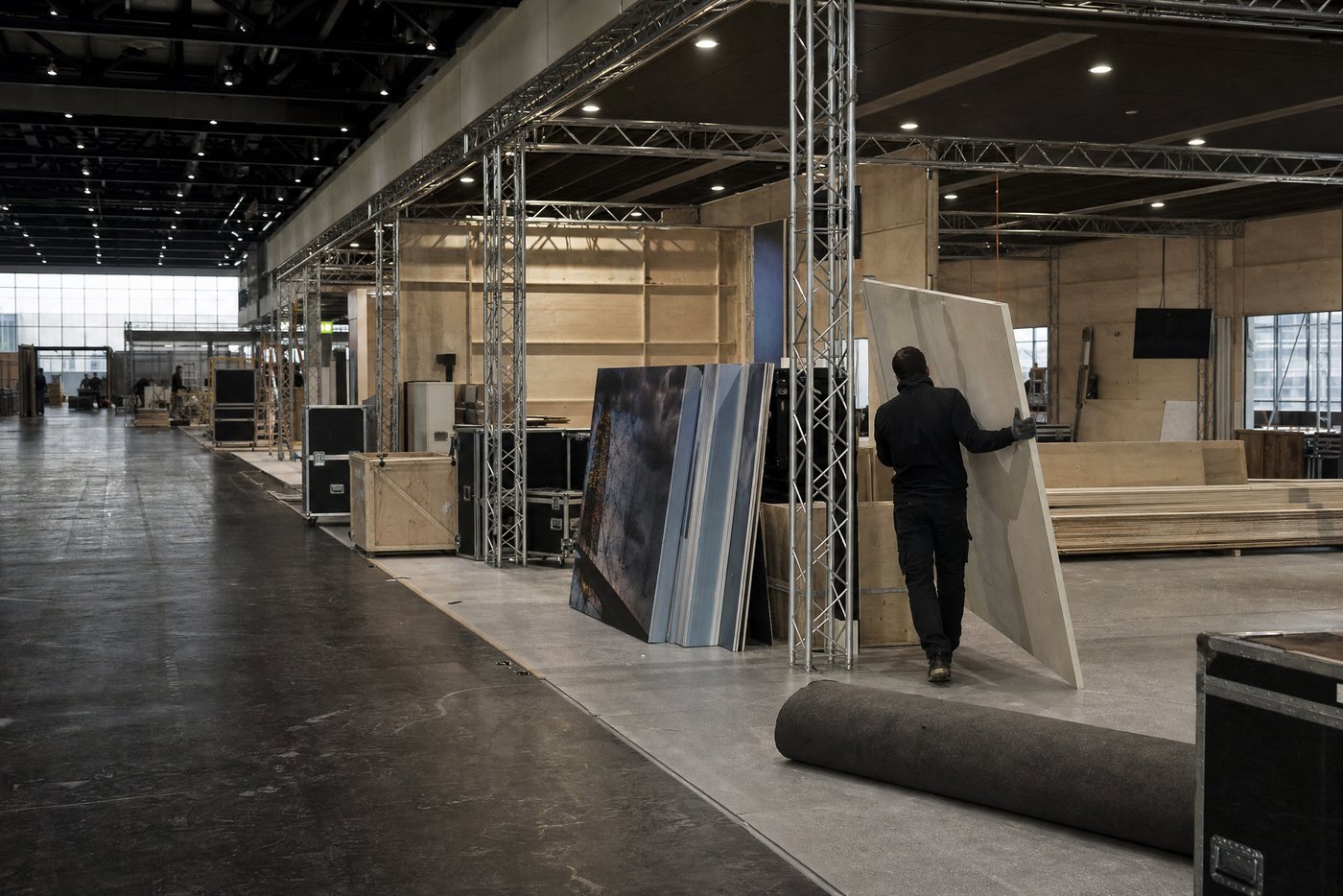
Truss from the warehouse, printed panel from the workshop. Both go on the same document to the same stand.
For exhibition stand building, stand construction and exhibition services: from the complete stand through furniture and lighting to assembly, transport and staff. Jobtura holds the project together until the hall opens.
You set up your account yourself – registration opens in a new tab and needs a moment the first time. If you would rather know first whether we are a match, send us an enquiry, no obligation.
 Stock photoOne stand, one project, one invoice.
Jobtura · Enquiry → Quote → Project
Stock photoOne stand, one project, one invoice.
Jobtura · Enquiry → Quote → Project
Three everyday steps that cost you time today, and how they run with Jobtura:
Four job types, one build-up day and a vehicle that has to leave on time.
Assembly line items carry planned dates of their own, independent of the delivery date. Scheduling takes both into account.
A margin calculation shows before you commit which selling price gives which gross profit. In the project, costs, income and dates come together across all jobs.
The packing list can be grouped by trade. Picking works through it line item by line item and is confirmed by barcode. Shortfalls are recorded, not overwritten.
Missing furniture you hire in, carpet you order. The hiring in runs as a document chain of its own through to the return delivery. Every article carries its sources of supply with price and delivery time.
An exhibition stand comes down to walls, flooring, furniture, lighting and one large printed surface. Behind it sits a project where a lot of things have to come together at exactly the right time. And when the fair opens, it all has to be standing.
Sales, rental, production and hiring in run in Jobtura as separate job types, each with its own document chain. Only services and goods sit in the same job. They come together in the project: it gathers any number of jobs and shows them in a tree view.
Then you plan: which articles are needed, what is in your own stock, what has to be hired in or bought? Which fitters, which vehicles, when the build-up, when the get-out? If the project moves, that carries through to the jobs inside it, instead of each one being dragged along by hand.
Whether furniture, displays, trussing or lighting are already committed to another stand is shown by the bar chart across jobs and line items. Traffic lights flag a shortage as you enter it, not only when it is packed.
This is exactly where exhibition stand building differs from classic event technology. Part of the stand comes out of the warehouse again and again. Another part is made specially for this one project.
For custom walls, counters, platforms or cladding you open a production job, with its own documents from the quote through the order confirmation to the delivery note. Material used up along the way hangs on it as consumable articles.
Graphics and prints are produced at the same time. Banners, films, fabric prints and lettering belong to the project just as much as the substructure beneath them. What is built in house and what is ordered outside hang on the same project.
Papers for the stand sit on the job, not in a folder beside it. Required documents make it obvious before the next step when something is missing.
Packing lists prepare what belongs on which vehicle and to which stand. Line items are assigned to transports, transports are bundled into routes. Anything nobody has planned is listed separately, so nothing gets left behind.
After the fair the way back to the warehouse begins. Damage and late returns are recorded and can be passed on, instead of quietly getting lost. For items tracked individually it stays traceable which one was with which customer.
Fitters, joiners, project managers and drivers have to be in the right place at the right time. Qualifications, availability and approved absences feed into the staffing. For the vehicles, capacity and the licence class held on file count.
At the end, purchasing, hired-in equipment, staff and vehicles sit against the agreed sales, rental and service line items. What the stand brought in is something you read off, instead of gathering it together after the fair.
Entered once, usable everywhere. No double entry.
And it carries on from there on the same job: quotes can be signed digitally, deposit, interim and final invoices follow from it, incoming payments and reminders hang on it, and at the end the data goes to the accounts.
Where spreadsheets stop, Jobtura carries on: stock levels, picking and scanning are built in. No extra tool needed.
Packing lists straight from the order. Tick off line by line, so nothing is forgotten and nothing is packed twice.
A live overview in the warehouse: which orders are due, what is packed, what is missing, on a screen right there.
Barcode and QR scanning by smartphone: book equipment, record withdrawals, check returns, in seconds.
Five quick questions, an answer straight away – then we both know whether this is a match.
Jobtura is not theory software. It has been in use for years with rental businesses, event technicians and service providers across Germany, built with the people who work with it every day.
 Stock photo
Truss from the warehouse, printed panel from the workshop. Both go on the same document to the same stand.
Jobtura comes in two forms: as full rental software for businesses with a warehouse and equipment fleet, and as a lean cloud entry for small teams.
The full ERP software for rental, sales & service. That is this page.
Jobtura as a Service , the lean cloud entry for small teams.
And the two belong together: JaaS also works as an app alongside Sales & Rent. You can just as well use only the app, or only Sales & Rent. And where the software runs is your call: in our cloud, on your own server, or on a machine in your own building.
ERP and inventory software for Rental · Sales · Service. You start lean with what you need and add more as you grow: