At the device
Two hundred parts, one process.
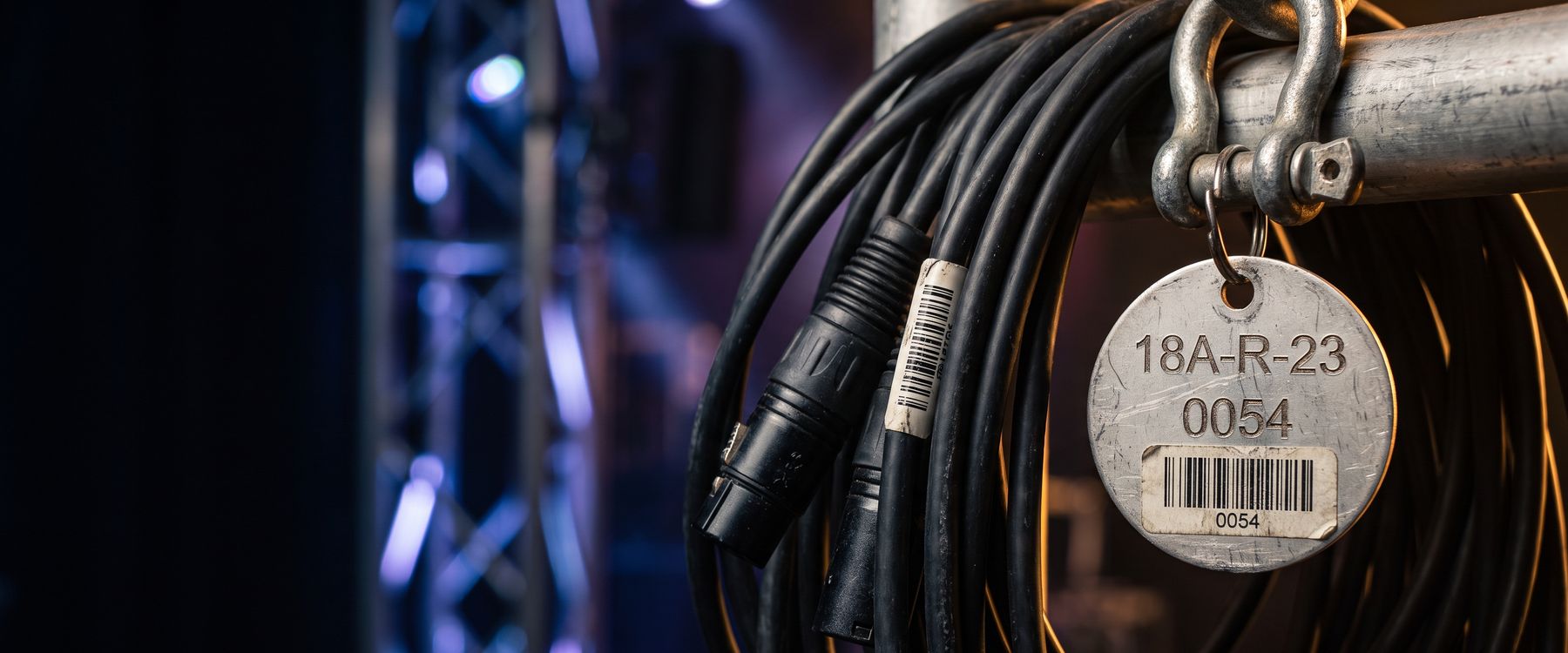
What is sold as one line item comes back to the warehouse as individual parts, with condition, damage and history.
The sold concept turns into the real requirement: trussing, speakers, cables, cases. Shortfalls show up before the lorry arrives and get hired in instead of forgotten.
You set up your account yourself – registration opens in a new tab and needs a moment the first time. If you would rather know first whether we are a match, send us an enquiry, no obligation.
 Stock photoWarehouse, crew and invoice under control.
Jobtura · Enquiry → Quote → Order
Stock photoWarehouse, crew and invoice under control.
Jobtura · Enquiry → Quote → Order
Three everyday steps that cost you time today, and how they run with Jobtura:
The customer buys a result. The warehouse packs individual parts. Scheduling sits in between.
The stage is sold at a flat price. Detailed planning turns that into the real requirement: trussing, speakers, cables, cases. The two stay linked, or deliberately apart.
Your own stock is checked against running and planned jobs. Whatever is missing becomes visible and can be replaced, hired in or ordered, as its own document chain within the same job.
First the requirement: sound engineer, lighting technician, operator. Then who can cover it. Qualifications and licence classes feed into the staffing.
Income and costs sit side by side on the job. You see not only the turnover of a production but the contribution margin.
On a production, more hangs on the job than material. Four things that usually sit in separate lists.
From the site visit weeks beforehand through delivery, build-up and rehearsals to the show schedule and the get-out. Every step hangs on the same job.
Which vehicles are needed, what volume and tonnage has to move. And who on the crew may drive them, by licence class.
What is missing becomes a requirements list and from there a purchase. Ordered, delivered or collected, and assigned back to the main job.
Material is scanned back in, quantities and items checked. Anything missing or damaged shows up, items can be flagged as faulty and sent for inspection.
Commercially the same job carries on: the quote is signed digitally, deposit, interim and final invoices follow from it, incoming payments and reminders hang on it, and at the end the data goes to the accounts.
A customer calls with a need. In Jobtura that becomes a quote, with specific equipment, with services, or as a production offered at a flat rate. Whether availability of the offered material is already checked at that point is your decision.
The finished quote goes to the customer and can be signed online. Once it becomes an order, it carries on without a break: the order produces the packing list, the material is picked, and the items actually issued are assigned by scan. From that follow the delivery note and the invoice.
Commercially too, Jobtura covers the whole job, from the deposit through interim and partial invoices to the final invoice. Then come incoming payments and, where needed, reminders. After that the data goes to the accounts.
In event technology, what the customer buys is not necessarily what gets packed in the warehouse later. That is exactly where the real scheduling begins.
A dry hire customer orders a particular projector or speaker type. For a full production, by contrast, only the result is sold at first: a stage, a sound concept, an event package at a flat rate. Jobtura can join the sales view and the scheduling view, or deliberately keep them apart.
From the stage that was sold, detailed planning derives the actual requirement: trussing, speakers, lanterns, cables, cases. Then comes the decisive question: how much of that do we really have available in the period needed? Own stock is checked against running and planned jobs. Shortfalls become visible and can be substituted, sub-hired or purchased.
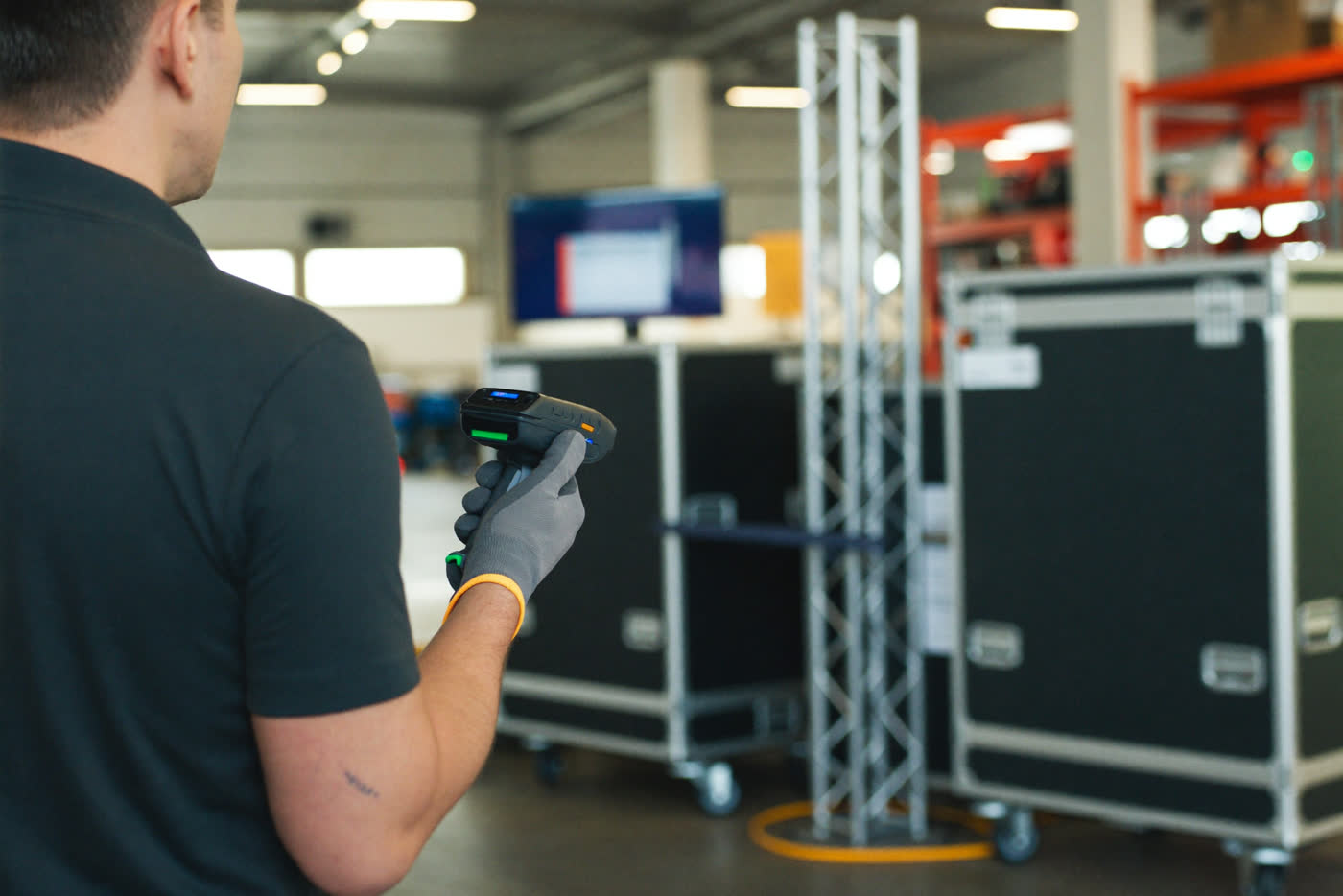
After the production the process runs backwards. Material is scanned back in, quantities and items are checked, anything missing or damaged shows up. Items can be flagged as faulty and sent for inspection.
At job level, revenue, external costs and own costs can be set against each other. That shows not only what a production brings in, but what is actually left commercially.
Schedules structure the production in time: from the site visit several weeks before the event, through delivery, build-up and rehearsals, to the show running order down to the minute and the get-out afterwards.
Staff can be planned by requirement as well. At first it is not a named person that matters but the role needed: sound engineer, lighting engineer, operator, production manager or crew. Then you check who can cover it.
The same goes for transport and logistics. Which vehicles are needed, what volume and tonnage has to move, does the scheduled material even fit in the vehicles planned, and which staff may drive them by licence class?
Entered once, usable everywhere. No double entry.
And it carries on from there on the same job: quotes can be signed digitally, deposit, interim and final invoices follow from it, incoming payments and reminders hang on it, and at the end the data goes to the accounts.
Where spreadsheets stop, Jobtura carries on: stock levels, picking and scanning are built in. No extra tool needed.
Packing lists straight from the order. Tick off line by line, so nothing is forgotten and nothing is packed twice.
A live overview in the warehouse: which orders are due, what is packed, what is missing, on a screen right there.
Barcode and QR scanning by smartphone: book equipment, record withdrawals, check returns, in seconds.
Five quick questions, an answer straight away – then we both know whether this is a match.
Jobtura is not theory software. It has been in use for years with rental businesses, event technicians and service providers across Germany, built with the people who work with it every day.
 Stock photo
What is sold as one line item comes back to the warehouse as individual parts, with condition, damage and history.
Jobtura comes in two forms: as full rental software for businesses with a warehouse and equipment fleet, and as a lean cloud entry for small teams.
The full ERP software for rental, sales & service. That is this page.
Jobtura as a Service , the lean cloud entry for small teams.
And the two belong together: JaaS also works as an app alongside Sales & Rent. You can just as well use only the app, or only Sales & Rent. And where the software runs is your call: in our cloud, on your own server, or on a machine in your own building.
ERP and inventory software for Rental · Sales · Service. You start lean with what you need and add more as you grow: