On the day of the event
The schedule exists before the first plate does.
When to prepare, when to load, when to deliver, when to set up. The packing list is the plan, not the record afterwards.
300 guests, one time slot, kitchen, service, vehicles and hired furniture. Jobtura keeps quotation, packing list, staffing and billing on one order and does the arithmetic before the first plate goes out.
You set up your account yourself – registration opens in a new tab and needs a moment the first time. If you would rather know first whether we are a match, send us an enquiry, no obligation.
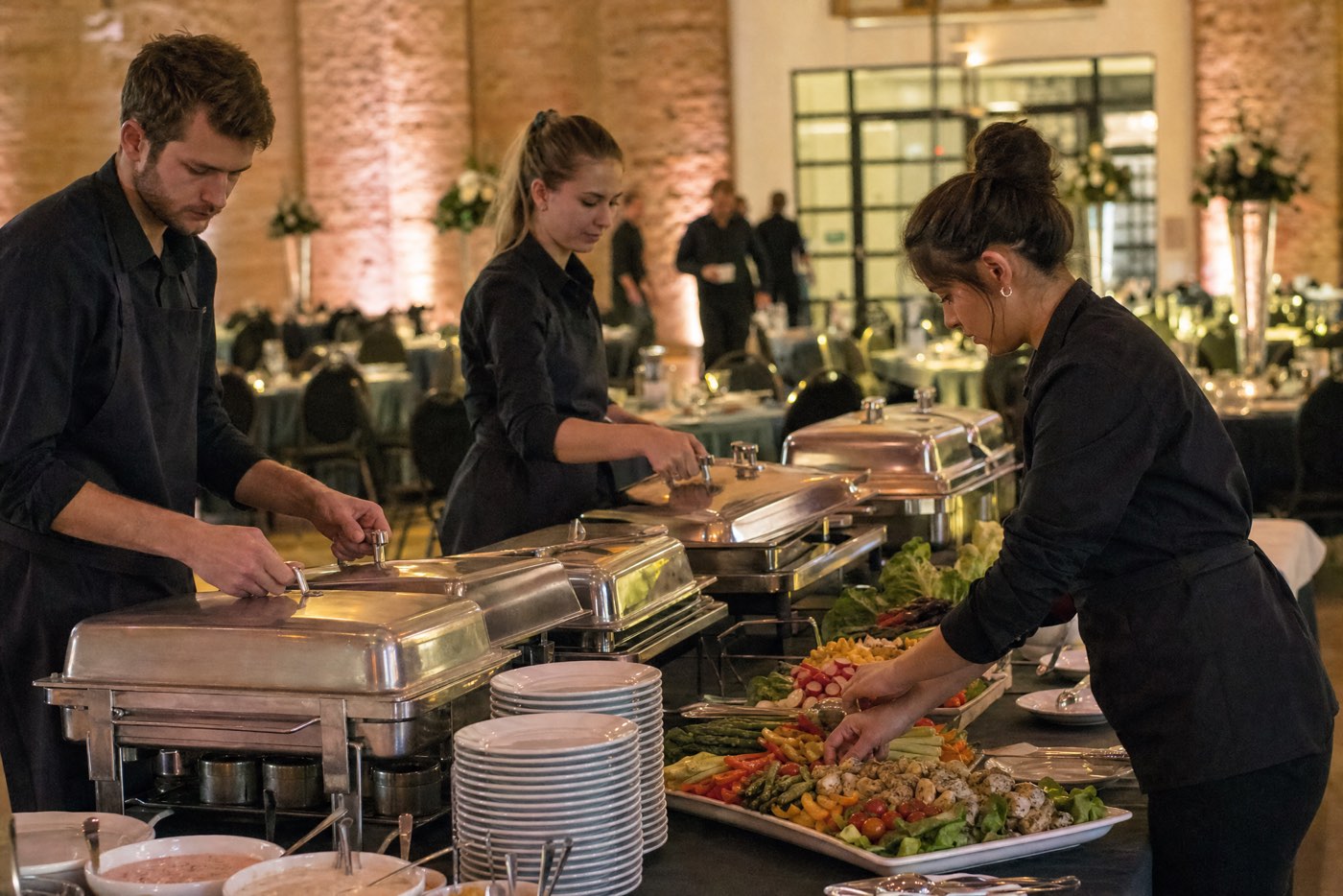 Stock photoOne order, one schedule, one settlement.
Jobtura · Enquiry → Quote → Order
Stock photoOne order, one schedule, one settlement.
Jobtura · Enquiry → Quote → Order
Three everyday steps that cost you time today, and how they run with Jobtura:
Sales, kitchen, warehouse, staff and logistics all meet on a single day. They are prepared weeks beforehand.
Chefs, service staff and drivers are scheduled by qualification and availability. Approved absences take effect on the plan immediately.
Posted in advance and converted into a down payment invoice. Partial and closing invoice follow once the last guest has left.
When to prepare, load, deliver and set up is listed with times in the order in which it has to happen. Kitchen and warehouse read the same list.
Crockery, cooling and furniture are articles with availability per day. Whatever is missing is brought in as a hire on the same order.
At the start it is rarely settled what the event will look like. How many guests, buffet or set menu, which drinks concept, how much service, and which of it you are taking on at all.
From that a quotation is built in which food, drinks, staff, logistics and material are costed together. Service and goods may sit in the same job, valued by time or as a flat rate.
If expectations change, the quotation is not overwritten. It continues in a new version, and the previous state is kept as a revision. The first draft becomes a fourth without anyone hunting for the third.
Before you commit, the margin calculation shows the gross profit at the intended price. Whether the concept carries is your decision beforehand.
With the order it is settled not only what was sold but what has to happen. From it comes the packing list, or function sheet, your central plan for the day: when material is prepared, when production starts, when vehicles are loaded, when delivery happens and at what time set-up, reception, food, service and tear-down take place.
Chefs, service staff, drivers and event management are scheduled for it. Qualifications and availability govern the staffing, approved absences take effect on it immediately, and the bar chart shows overlaps between two events on the same weekend.
Pay types cover hourly wage, flat rate, supplement and benefit in kind. What a Sunday evening shift costs does not have to be worked out by hand.
Crockery, glasses, cooling, standing tables and buffet stations are articles with availability per day. If your own stock is not enough, you bring in the missing quantities as sub-rentals from your suppliers, and they hang on the same order. The same goes for everything around it: furniture, decoration, a DJ or a band are bought-in work and appear in the costing, so it stays visible what comes from your own house and what you buy in.
Larger events are rarely paid only after the last plate. A down payment can be posted in advance and converted into a down payment invoice, after which partial and collective invoices follow, and finally the closing invoice.
After the event, whatever comes back is taken back. What was consumed stays with the customer, hired items are back in the yard, missing items stay open. Part delivery, cancellation and return act on stock and invoice.
The initial costing is created while the quotation is being written: against the sales prices stand cost of goods, staff, vehicles, bought-in work and hired equipment. After the event you put the actual figures beside them, and the initial costing becomes the final costing. How many staff hours did you really need, what did you have to buy in on top, where was the effort higher than planned.
The feeling that it went well thereby becomes an answer to the question that matters for the next quotation: what did you actually earn on this event.
Entered once, usable everywhere. No double entry.
And it carries on from there on the same job: quotes can be signed digitally, deposit, interim and final invoices follow from it, incoming payments and reminders hang on it, and at the end the data goes to the accounts.
Where spreadsheets stop, Jobtura carries on: stock levels, picking and scanning are built in. No extra tool needed.
Packing lists straight from the order. Tick off line by line, so nothing is forgotten and nothing is packed twice.
A live overview in the warehouse: which orders are due, what is packed, what is missing, on a screen right there.
Barcode and QR scanning by smartphone: book equipment, record withdrawals, check returns, in seconds.
Five quick questions, an answer straight away – then we both know whether this is a match.
Jobtura is not theory software. It has been in use for years with rental businesses, event technicians and service providers across Germany, built with the people who work with it every day.
 Stock photo
When to prepare, when to load, when to deliver, when to set up. The packing list is the plan, not the record afterwards.
Jobtura comes in two forms: as full rental software for businesses with a warehouse and equipment fleet, and as a lean cloud entry for small teams.
The full ERP software for rental, sales & service. That is this page.
Jobtura as a Service , the lean cloud entry for small teams.
And the two belong together: JaaS also works as an app alongside Sales & Rent. You can just as well use only the app, or only Sales & Rent. And where the software runs is your call: in our cloud, on your own server, or on a machine in your own building.
ERP and inventory software for Rental · Sales · Service. You start lean with what you need and add more as you grow: